Archive for November, 2009

New shipwreck located October 20th 2009

By frankie, 18 November, 2009, No Comment

This wreck discovered by a team of divers from the SEA explorers club, was found in the Straights of Mallacca. The wreck is of an as yet unknown cargo vessel of approx. 2500 GRT. It was accidentally discovered by a team of tech divers from the club, using a local fishing boat, whilst searching for another wreck from WW2. The wreck a British submarine had been lost after being attacked by a Japanese aeroplane. The team had been able to identify the local area in which it had been working at the time of the attack, and after studying the marks with the help of local fishermen, chrtered a local boat and headed out.

The team on the same trip was also able to identify another Japanese submarine and a large boiler believed to have come from a steamship sunk by British mines.

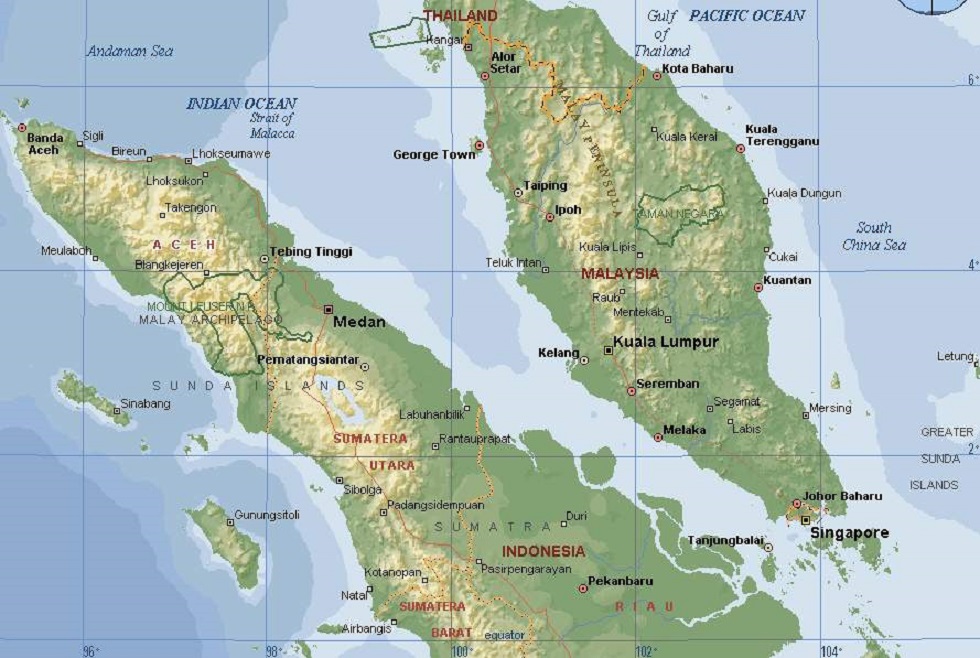
The cargo ship itself sits in 60m of water in the area of Panang, Malaysia. She has an extremely large crane lying next to the main hold, and the cargo of the vessel has  spilled into the sand in and around the crane. This is probably as a result of the sinking. The bridge however sits upright, and as a result the masts are now covered with nets, so caution is needed.

The team was comprised of Fri, Tim, and  Jeremy and was led by Tim Lawrence. This team are all planning further trips in the near future to discover more about this wreck and its history.

Post to Twitter Post to Facebook

Relocation and Identification of WW2, HIJMS Minelayer ‘Hatsutaka’

By frankie, 15 November, 2009, No Comment

Sun sets on the boat

Sun sets on the boat

Historical Perspective

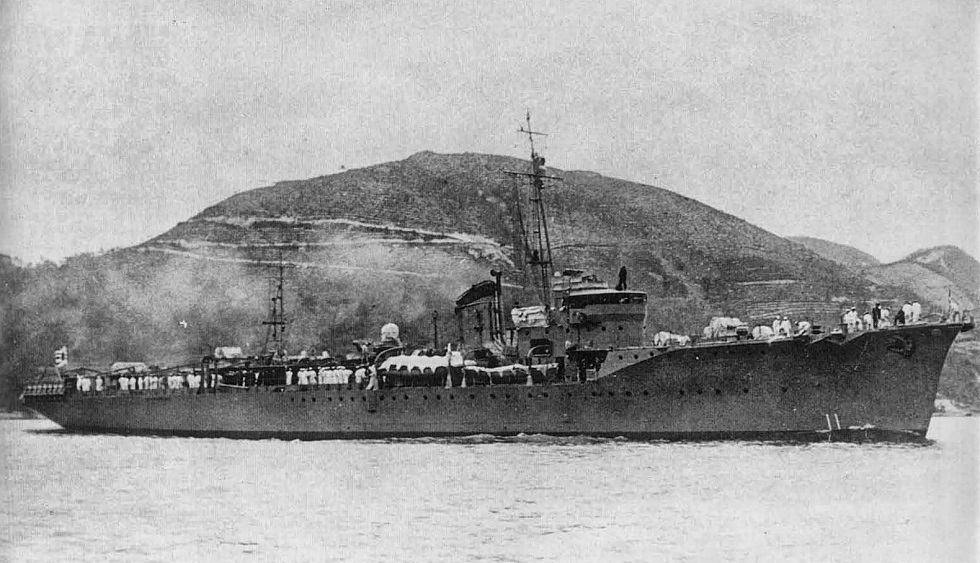
Giving its name to that class of ship, the Imperial Japanese Navy Minelayer Hatsutaka was completed in October 1939. Built by Harima and Co. and measuring 90.9 metres in length with a beam of 11.3 metres, Hatsutaka displaced 1608 tonnes. She was equipped with three boilers delivering 6000 hp, giving the ship a maximum cruising speed of 20 knots.

The Hatsutaka class, were dual-purpose minelayers and net-tenders with a capacity of up to 360 mines.  At the time of building, HIJMS Hatsutaka was armed with four 40mm guns and an additional four 25mm anti-aircraft guns.

Later in WW2, as the Japanese became desperate to counter the increasingly effective Allied submarine offensive, HIJMS Hatsutaka was converted into an escort. Operating throughout the Gulf of Thailand and Malaysia, Hatsutaka became a familiar enemy of US submarines, fiercely defending Japanese Marus transporting raw materials to fuel the war machine.

On May 3rd 1945, Japanese Naval records show that the Hatsutaka attacked a submarine in the southern Gulf of Thailand, dropping depth charges on the submerged vessel at 30 fathoms. It’s believed that this was the Baleo Class submarine USS Lagarto [SS-371]. All 86 men on the USS Lagarto were lost. This sub was (identified) and found in the Gulf of Thailand, by Thailand- based tech dive operator Jamie McCleod aboard his MV Trident.

Commanding Officer of the USS Lagarto, Commander Latta had previously made seven patrols as the CO of USS Narwhal II (SS-167). Each of these was designated successful for the award of combat insignia, a record unsurpassed in the Submarine Force.

USS Hawksbill [SS-366] Commanding Officer, Lt. Cmdr. F. W. Scanland, Jr. was a close friend of Commander Latta. Stationed in peninsular Malaysia, he swore to avenge the loss of the Lagarto.

This excerpt is from the Official History of the USS Hawksbill [http://usshawkbill.com].

“Continued westward and at two o’clock in the morning, 16 May, commenced patrolling in shallow water seven miles off the Malay coast, just north of Pulo Tenggol, Malaya, scene of much of Hawksbill’s later actions.
Within two hours after arrival on station, and 2 hours before dawn, Hawksbill contacted an unidentified target running south along the coast. Within an hour after contact, after closing to get at the target before he could enter a mined area behind Pulo Tenggol, Hawksbill had fired six torpedoes from the forward nest for two hits. Range was 2600 yards. Target stopped and opened up with a barrage of four-inch and automatic weapons fire which lasted off and on until seven o’clock in the morning. The target was obviously hurt, but still afloat, and his gunfire held Hawksbill off during darkness.
Pulling clear until dawn, Hawksbill submerged and started back in, closing sufficiently to identify the target as a sleek, fast mine layer of the Hatsutaka Class. He was being towed slowly toward the beach, stern first, by a small sea truck of about 400 tons. At extreme range of 4650 yards, Hawksbill fired a second salvo of three torpedoes at this target. Sighting the wakes, Hatsutaka opened fire with everything he had in an effort to detonate the torpedoes. To no avail, however, for one broke him in two with a terrific explosion amidships.”

Davy Jones Locker Dive Expedition: March 28th 2008, Eastern Peninsular Malaysia

After researching war reports and cross referencing this data against local knowledge, we determined the likely location of HIJMS Hatsutaka. Malaysian fishermen were aware of a large wreck in their waters, and suggested it was from the correct period, but were unaware of the identity.

We believed the wreck would be situated several kilometers north of Dungun, to the north-east of Pulao Tengor, approximately one kilometer off shore. This is a popular spot for the fishermen to drop fish traps, and for spear fishing.

With the logistical assistance of local Tenngol Island dive operator, Charlie, we chartered a fishing boat and headed to the wreck site, with the objective of locating and identifying the Hatsutaka. Scheduled during one of South East Asia’s inter-monsoon periods, the expedition was coordinated to coincide with the best possible diving conditions. A large river estuary flows into the sea to the south of our target, but we would be diving sufficiently far north and up-current for visibility to remain unaffected.

Arriving early in the morning with near zero wave heights, we ran a brief sonar survey, before deploying the shot line. Maximum depth in this area is relatively shallow at 35m, but on this day the north-south current was running exceptionally strong.

We planned five waves of dives throughout the day, breaking into teams of two divers so we could discuss the observations from each dive and maximize the effectiveness of our survey. To our surprise, visibility was great, ranging upwards to 15m.

On the first dive our shot line was secured to what we believe to be the forward section of the wreck. The ship is broken into two main parts with the break situated amidships, rear of the bridge.

The bow section is lying on its port side, measuring approximately 45m in length. This forward section lies on a roughly north-south orientation.

The stern section of the wreck is sitting upright on the seabed, approximately 25m off the bow section, extending west, towards the mainland. The structure is still mostly solid, with portholes lining the hull. This is consistent with the information given in the original war report, with Hatsutaka being towed stern-first and breaking in two during the second attack.

In addition to the two main sections, there are other scattered areas of wreckage. Primarily attributable to the original torpedo attack, it is also speculated to be a result of dynamite fishing which was ongoing until as recently as ten years ago when local marine police began enforcing a ban.

The wreck is rich with WW2 artifacts. In the debris field beneath the bridge, we observed typical WW2 Japanese naval items. Of particular interest was part of a pair of binoculars, very similar to a set recovered from the Japanese Heavy Cruiser, Haguro [sunk 55 miles southwest of Penang, Malaysia].

Also fascinating, was a large gyroscopic ship’s compass and range-finding instrument, fitted with intricate glass prisms and scales.

Scattered across the wreck we saw several pressure sensitive mechanisms stamped with Japanese script which we assumed to be part of depth charge triggers.
On the stern section there are many unexploded shells. We recovered an empty casing, which measured 40mm, again consistent with the technical details for HIJMS Hatsutaka. We also observed what we determined to be an anti-aircraft turret mounting, and believe the gun to have fallen off the mounting, into the wreckage.

This remains a very proud discovery for the team led by Tim Lawrence and he hopes to lead many more in the future bringing tech tech diving further forward in the local area.

Post to Twitter Post to Facebook

C47 Transport

By frankie, 15 November, 2009, No Comment

Tim descending on the wreck

Tim descending on the wreck

Located and correctly identified, North-East of Koh Tao, by a team of technical divers from the SEA explorers club, led by Tim Lawrence.This airplane was previously thought to be a legendary P38 lightning and after an unsuccessful expedition to locate it, a second team set out to try again to find the wreck.

The problem with airplane wrecks is that they are very small targets without any good areas to tie into. The fact that she was also lying at a depth of 60m, meant she posed a very difficult target for any technical diving team.

With this in mind our team set out from Koh Tao and travelled overnight on our converted fishing vessel. The conditions were excellent for the search, flat and calm with little wind. But even so she proved a difficult target with two unsuccessful shots on the sonar return. We put the last shot in after increasing the weight and reducing the size of the buoy, as the current on the mark was causing our lazy shot to run out and drag along the bottom.

The third shot proved to be successful and we descended on the nose of the plane. With the heavy narcosis due to the depth and the work rate on the descent, it took some time to figure out the outline. The fuselage lies mainly intact with one wing still attached and engine in place.

We retrieved what we believed to be part of the undercarriage which had some numbers with which we hoped to identify the wreck. It later turned out to be part of the co-pilots seat. After speaking to an aviation expert we were informed that the maker’s plate for the aircraft lied just behind the position where we recovered the co-pilots seat frame.

After doing some more research we were told by a retired air force Colonel that the debris was that of a civilian C47, not a military version.

The wreck is still diveable but only at certain times of year, due the strong currents in the surrounding area.


Post to Twitter Post to Facebook

Cargo Vessel – Straits of Mallacca

By frankie, 15 November, 2009, No Comment

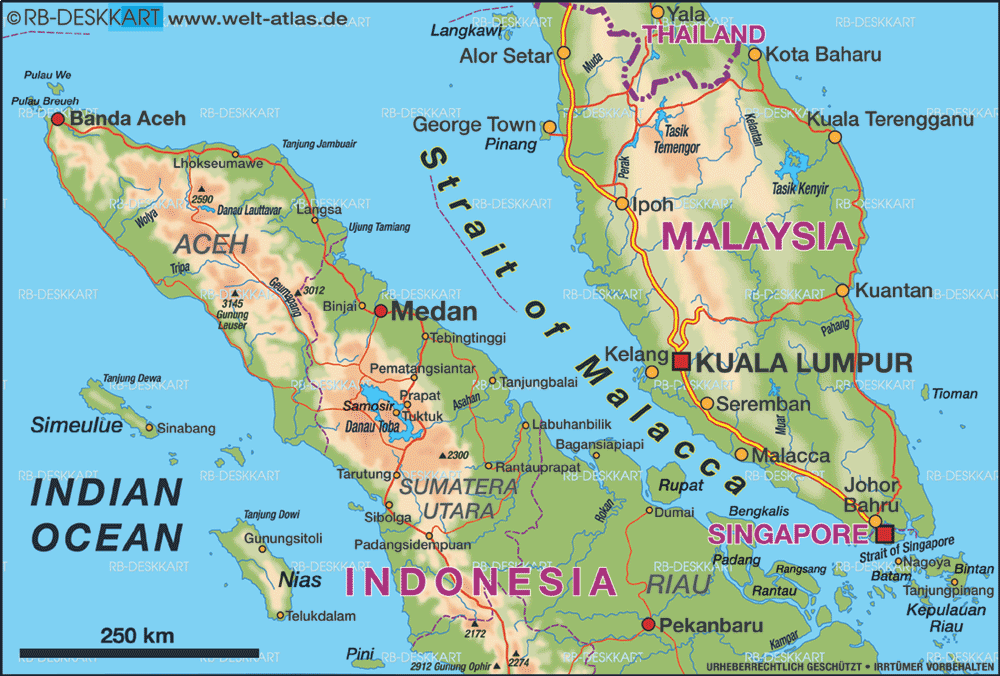
A team of divers from Davy Jones Locker recently located a shipwreck in the Penang straits of Mallacca. The wreck is of a currently unknown cargo vessel of approximately 2500BRT.

After chartering a local fishing boat the team of technical divers from DJL accidentally discovered the wreck after searching for a wreck of a WW2 British submarine.

The cargo vessel sits at 60m and has a huge crane lying next to the main hold of the ship. The cargo has spilled into the sand around the crane as a result of sinking. The bridge sits upright and has nets flying from its mast as if clawing for the surface.

The team also located and identified a Japanese submarine and a large boiler from a steamship believed to have fallen foul to a British submarine.

The team comprised of Fri, Jeremy, Tim 2 and was led by Tim Lawrence from Davy Jones’ Locker, all of whom plan to resume the search to identify the vessel as soon as possible

Post to Twitter Post to Facebook

Scooner Wreck found in 2007 by S.E.A Explorers club tech team

By frankie, 15 November, 2009, No Comment

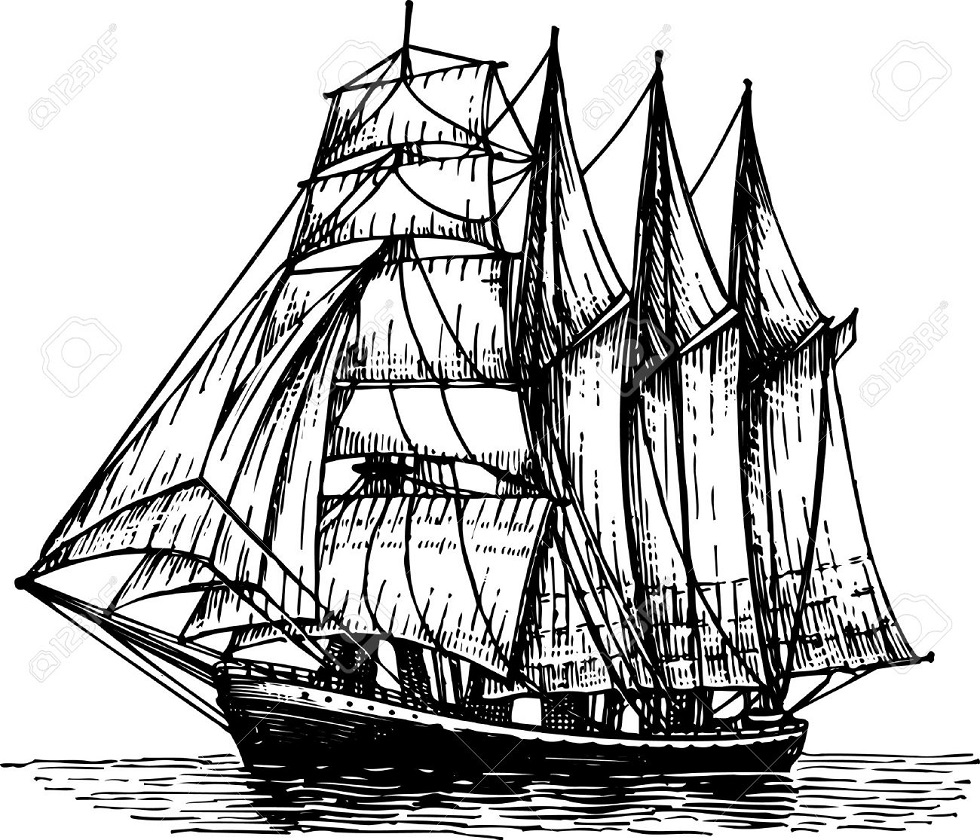
Picture of similar schooner

Picture of similar schooner

A team of divers from Davy Jones’ Locker located this previously undiscovered shipwreck in 2007.

After researching the WW2 records for attacks on ships in this area the team decided to target a 200BRT scooner. This particular vessel was believed to be attacked by a beleno class sub close to Koh Tao.

Before searching for this wreck the team of divers from DJL checked through fisherman’s marks close to that of the marks on the original war action report. Identifying the time of year the scooner sank, allowed the team to work out trade wind direction at that particular time therefore narrowing the area in which to search.

War records stated that a submarine deck gun sank the scooner, however it seems unlikely that a wooden ship would sink directly in this position due to trade winds.

The team of technical divers from Davy Jones’ Locker prepared equipment along with previously studied chart datum and set off in search of the wreck on their high-speed rib. After 35 minutes they reached the area and picked up a sonar return almost straight away. This return was considered low suggesting a wooden ship that had broken up. After 1 hour of running out a line using the sonar the team dropped the shot.

The team descended to 48 metres hitting a thermocline. The first part of the scooner to come into view was the ballast stone, from here the DJL divers secured shot and ran a distance line out around the 200BRT ship. Remnants of the ships hold were soon discovered. These consisted of bundles of rubber and hundreds of plates. The plates were a very interesting find and were later used to help identify the wreck more conclusively after researching their 555-brand mark.

Due to its location this wreck can be dived with Davy Jones’ Locker technical deep dive team should you wish!

Post to Twitter Post to Facebook