Posts tagged ‘japanese ww2 wrecks’

Tottori Maru

By djl_team, 30 July, 2011, 1 Comment

The Tottori Maru was one of the notorious “hellships” used to carry Australian, American and English prisoners of war around the south china seas. She was built in 1913 by Russell and Co, Port Glasgow, in Scotland for the Nippon Yusen Kaisha NYK shipping company. She was launched on Monday 25 /08/1913 and sailed under a Japanese flag. Originally she was put to work as a cargo carrier on the Bordeaux- Cristobel to New York run, between 1917 and 1923, but when the Japanese entered the war, she was pressed into service for the Imperial Japanese Navy (IJN) propelled by a steam triple expansion engine, 556 nhp with a single screw that gave her a respectful 10 knots speed, which was good in her day. Tonnage was 5973 grt, length 128 m, Beam 17m, draught 8.5m.
One of her more infamous voyages was undertaken on 8th of October 1942, when she set sail at 0900 from Manila Bay with a cargo of prisoners of war. A diary of this event was kept by Jim Brown and can be viewed here.
These POW’s were transported to Fusan in the Korean Peninsula, arriving on November 7th after narrowly avoiding a torpedo attack. The number of POW’s transported varies between accounts, but according to the account of Robert Phillips, an American POW, she was loaded with about 2000 men, 1500 in the rear hold and 500 more in the front. They were packed so tightly that they could hardly move, there was no ventilation, and they were fed crackers and water. Around 16 POW’s died en route and were buried at sea due to a combination of Dysentery, filth, starvation and a sense of hopelessness. Many more were to suffer horribly, later in life, with conditions caused by the inhumane treatment endured during this voyage and subsequent incarceration. According to the account of Mr. Phillips, on reaching Korea 1500 POW’s were disembarked from the rear holds and then transported over land to their final destination in Manchuria. The Tottori Maru then headed for Japan, Osaka, where the remaining POW’s were put to shore and taken to Mitsui camp, which would be their home for the next 3 years. It is important to note that some of these POW’s had already survived the Bataan Death March, only then to be exposed to the horrors of the hellships, and subsequent incarceration.
When fate finally caught up with the Tottori Maru, she was en route to Singapore in convoy with the Hatsutaka running escort. She was not carrying any POW’s at the time of her sinking.
The following is an excerpt from the captain’s report on the action which led to the sinking of the Tottori Maru:
15 May 1945
0008: Commenced attack from starboard bow as escort started around to port ahead of target. We were suckers.
0021: At range of 4000 yards from target, escort came around target’s stern and was 2000 yards from us on starboard quarter of target, turning for us. Cleared out at flank with escort, making only 17 knots eastern. Escort fired several close 4.7 shots.
0024: Informed COBIA of setup and he apparently started attack.
0029: Escort gave up chase, dropped three depth charges and went back.
0030: Paralleled target at 13000 yards
0048: Figured COBIA was in firing position. Fired two clips of 40mm towards escort.
0104: Escort apparently after COBIA. Started in again.
0120: Escort gave up COBIA chase.
012614:Commenced firing 3 bow MK 18- 2 torpedoes, small gyros 79∘S track. Torpedo run 2500 yards, depth 1 foot. No more Torpedoes.
012930:Hit in bow of target.
012936:Hit amidships.
0138: Tracking target stopped. Escort apparently alongside target for about 5 minutes.
0140: Escort headed for us.
0148: Escort turned away.
0151: Target pip disappeared.
The captain’s declassified log of the action dated 15 May 1945 is available here

22 August 1945
From: the commander submarines SEVENTH FLEET
To: the commander in chief UNITED STATES FLEET
Via: the commander SEVENTH FLEET
SUBJECT: USS Hammerhead (SS-364) Report of sixth war patrol correction to second endorsement.
Reference (a)ComSub7thFltConf.Ltr.Serial:01350-A 27 June 1945
1. The HAMMERHEAD reported sinking 6800 ton tanker at 0151, May 15 1945. COBIA has subsequently reported observing the attack, seeing two hits, watching the target sink, and recovering a life ring which identifies the target as the TOTTORI MARU, 5725 gross tons.

The Tottori Maru now lies in 75m of water on her port side, bow twisted and nearly broken off, facing the surface.
Note: This article has been collated from the many articles and official documents freely available on the internet. The wreck of the Tottori is a war grave. Nothing was taken from her during this expedition, except video and pictures to help us keep the memories alive of the members of the armed forces who gave and still give the ultimate sacrifice of life so that we may be free.
We are at present organizing a technical dive trip in collaboration with the Thailand Technical Wreck Diving Project to conduct a full survey of this vessel. If you would like to be involved, please contact us for more information.


Thailand Technical Wreck project
Originally established by a group of technical dive centres on Koh Tao, Thailand, to combine resources and help fund a technical diving liveaboard dedicated to the exploration of the Gulf of Thailand and Andaman sea, to look for shipwrecks of all ages, in the remotest regions ,for the purpose of surveying and documenting the wrecks and to help preserve these time capsules for future generations.
Founding dive centres: Koh Tao Tech Divers, Crystal Tech Divers, BansTec and Davy Jone’s Locker Tech.
All technical dive centres are welcome to join in and contribute to this project, to help us continue to enjoy a common passion , that is deep wreck diving and exploration.

Post to Twitter Post to Facebook

Relocation and Identification of WW2, HIJMS Minelayer ‘Hatsutaka’

By frankie, 15 November, 2009, No Comment

Sun sets on the boat

Sun sets on the boat

Historical Perspective

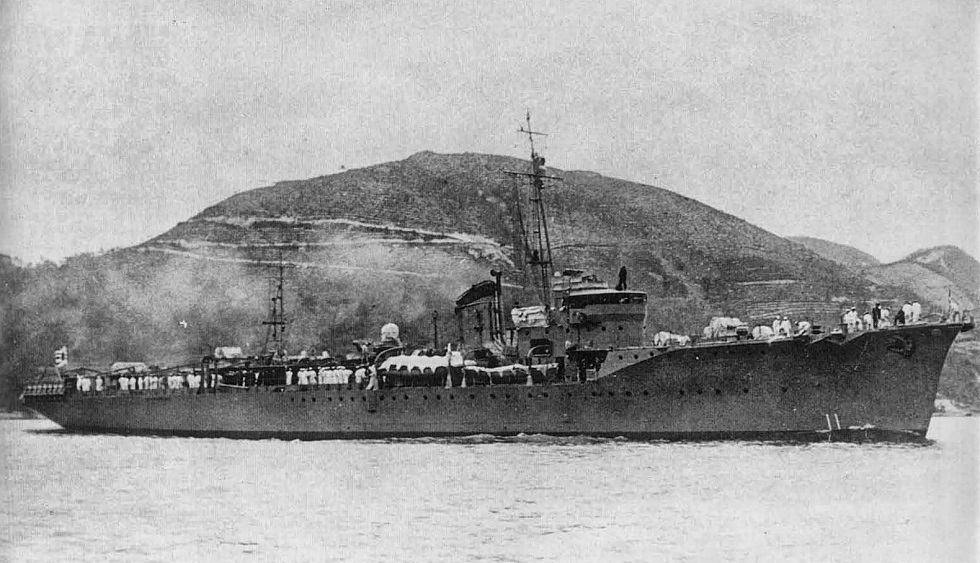
Giving its name to that class of ship, the Imperial Japanese Navy Minelayer Hatsutaka was completed in October 1939. Built by Harima and Co. and measuring 90.9 metres in length with a beam of 11.3 metres, Hatsutaka displaced 1608 tonnes. She was equipped with three boilers delivering 6000 hp, giving the ship a maximum cruising speed of 20 knots.

The Hatsutaka class, were dual-purpose minelayers and net-tenders with a capacity of up to 360 mines.  At the time of building, HIJMS Hatsutaka was armed with four 40mm guns and an additional four 25mm anti-aircraft guns.

Later in WW2, as the Japanese became desperate to counter the increasingly effective Allied submarine offensive, HIJMS Hatsutaka was converted into an escort. Operating throughout the Gulf of Thailand and Malaysia, Hatsutaka became a familiar enemy of US submarines, fiercely defending Japanese Marus transporting raw materials to fuel the war machine.

On May 3rd 1945, Japanese Naval records show that the Hatsutaka attacked a submarine in the southern Gulf of Thailand, dropping depth charges on the submerged vessel at 30 fathoms. It’s believed that this was the Baleo Class submarine USS Lagarto [SS-371]. All 86 men on the USS Lagarto were lost. This sub was (identified) and found in the Gulf of Thailand, by Thailand- based tech dive operator Jamie McCleod aboard his MV Trident.

Commanding Officer of the USS Lagarto, Commander Latta had previously made seven patrols as the CO of USS Narwhal II (SS-167). Each of these was designated successful for the award of combat insignia, a record unsurpassed in the Submarine Force.

USS Hawksbill [SS-366] Commanding Officer, Lt. Cmdr. F. W. Scanland, Jr. was a close friend of Commander Latta. Stationed in peninsular Malaysia, he swore to avenge the loss of the Lagarto.

This excerpt is from the Official History of the USS Hawksbill [http://usshawkbill.com].

“Continued westward and at two o’clock in the morning, 16 May, commenced patrolling in shallow water seven miles off the Malay coast, just north of Pulo Tenggol, Malaya, scene of much of Hawksbill’s later actions.
Within two hours after arrival on station, and 2 hours before dawn, Hawksbill contacted an unidentified target running south along the coast. Within an hour after contact, after closing to get at the target before he could enter a mined area behind Pulo Tenggol, Hawksbill had fired six torpedoes from the forward nest for two hits. Range was 2600 yards. Target stopped and opened up with a barrage of four-inch and automatic weapons fire which lasted off and on until seven o’clock in the morning. The target was obviously hurt, but still afloat, and his gunfire held Hawksbill off during darkness.
Pulling clear until dawn, Hawksbill submerged and started back in, closing sufficiently to identify the target as a sleek, fast mine layer of the Hatsutaka Class. He was being towed slowly toward the beach, stern first, by a small sea truck of about 400 tons. At extreme range of 4650 yards, Hawksbill fired a second salvo of three torpedoes at this target. Sighting the wakes, Hatsutaka opened fire with everything he had in an effort to detonate the torpedoes. To no avail, however, for one broke him in two with a terrific explosion amidships.”

Davy Jones Locker Dive Expedition: March 28th 2008, Eastern Peninsular Malaysia

After researching war reports and cross referencing this data against local knowledge, we determined the likely location of HIJMS Hatsutaka. Malaysian fishermen were aware of a large wreck in their waters, and suggested it was from the correct period, but were unaware of the identity.

We believed the wreck would be situated several kilometers north of Dungun, to the north-east of Pulao Tengor, approximately one kilometer off shore. This is a popular spot for the fishermen to drop fish traps, and for spear fishing.

With the logistical assistance of local Tenngol Island dive operator, Charlie, we chartered a fishing boat and headed to the wreck site, with the objective of locating and identifying the Hatsutaka. Scheduled during one of South East Asia’s inter-monsoon periods, the expedition was coordinated to coincide with the best possible diving conditions. A large river estuary flows into the sea to the south of our target, but we would be diving sufficiently far north and up-current for visibility to remain unaffected.

Arriving early in the morning with near zero wave heights, we ran a brief sonar survey, before deploying the shot line. Maximum depth in this area is relatively shallow at 35m, but on this day the north-south current was running exceptionally strong.

We planned five waves of dives throughout the day, breaking into teams of two divers so we could discuss the observations from each dive and maximize the effectiveness of our survey. To our surprise, visibility was great, ranging upwards to 15m.

On the first dive our shot line was secured to what we believe to be the forward section of the wreck. The ship is broken into two main parts with the break situated amidships, rear of the bridge.

The bow section is lying on its port side, measuring approximately 45m in length. This forward section lies on a roughly north-south orientation.

The stern section of the wreck is sitting upright on the seabed, approximately 25m off the bow section, extending west, towards the mainland. The structure is still mostly solid, with portholes lining the hull. This is consistent with the information given in the original war report, with Hatsutaka being towed stern-first and breaking in two during the second attack.

In addition to the two main sections, there are other scattered areas of wreckage. Primarily attributable to the original torpedo attack, it is also speculated to be a result of dynamite fishing which was ongoing until as recently as ten years ago when local marine police began enforcing a ban.

The wreck is rich with WW2 artifacts. In the debris field beneath the bridge, we observed typical WW2 Japanese naval items. Of particular interest was part of a pair of binoculars, very similar to a set recovered from the Japanese Heavy Cruiser, Haguro [sunk 55 miles southwest of Penang, Malaysia].

Also fascinating, was a large gyroscopic ship’s compass and range-finding instrument, fitted with intricate glass prisms and scales.

Scattered across the wreck we saw several pressure sensitive mechanisms stamped with Japanese script which we assumed to be part of depth charge triggers.
On the stern section there are many unexploded shells. We recovered an empty casing, which measured 40mm, again consistent with the technical details for HIJMS Hatsutaka. We also observed what we determined to be an anti-aircraft turret mounting, and believe the gun to have fallen off the mounting, into the wreckage.

This remains a very proud discovery for the team led by Tim Lawrence and he hopes to lead many more in the future bringing tech tech diving further forward in the local area.

Post to Twitter Post to Facebook